
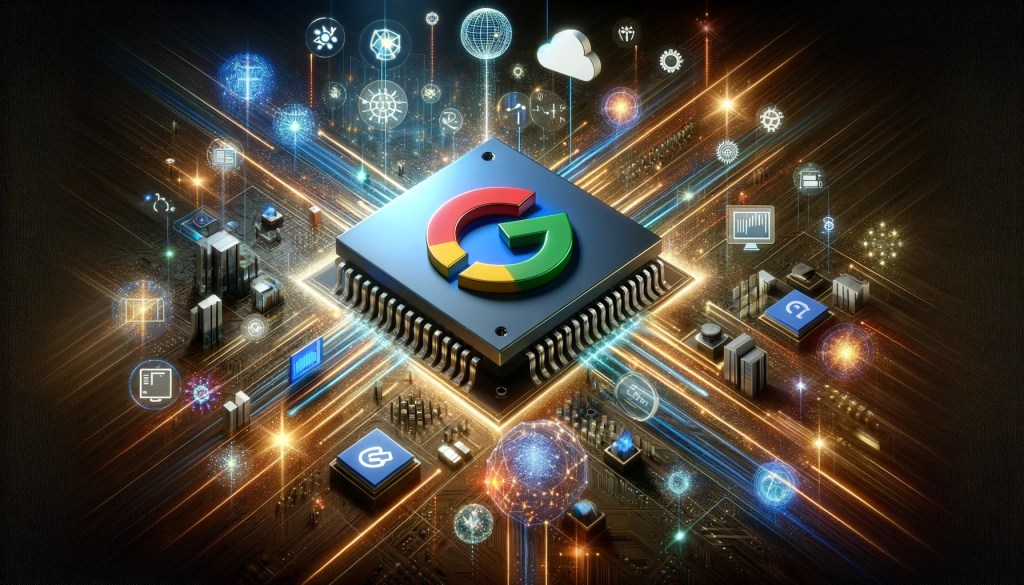
- Axion Chip Development: Google introduces the Axion chip, enhancing its semiconductor capabilities for a range of tasks, including AI work, to reduce reliance on external vendors.
- Competitive Shift in Chip Market: Google’s in-house chip efforts, particularly with Axion, position it in competition with Intel, Nvidia, and could change dynamics in the semiconductor industry.
- Strategic Focus on Custom Solutions: Google’s move towards custom chip solutions like TPUs and Axion underscores a strategic pivot to more efficiently meet the demands of AI-intensive operations.
Impact
- Enhanced Cloud and AI Services: Google’s Axion chip will significantly boost its cloud services’ performance and efficiency, benefiting companies reliant on Google Cloud for AI and big data analytics.
- Market Dynamics Alteration: The introduction of Axion may disrupt the traditional semiconductor market, affecting the business models of established players like Intel and Nvidia.
- Increased Self-Reliance: By reducing dependence on external chip suppliers, Google can better control costs and innovation timelines, crucial for maintaining its competitive edge in the fast-evolving AI landscape.
- Influence on Startup Ecosystem: Access to more powerful and efficient computing resources will empower AI startups and developers, potentially accelerating the innovation and deployment of new AI applications.
- Investor Sentiment: Google’s reinforced position in the semiconductor space may positively influence investor sentiment, highlighting its commitment to leading in AI technology and infrastructure.



 Eksentricity
Leave a comment