
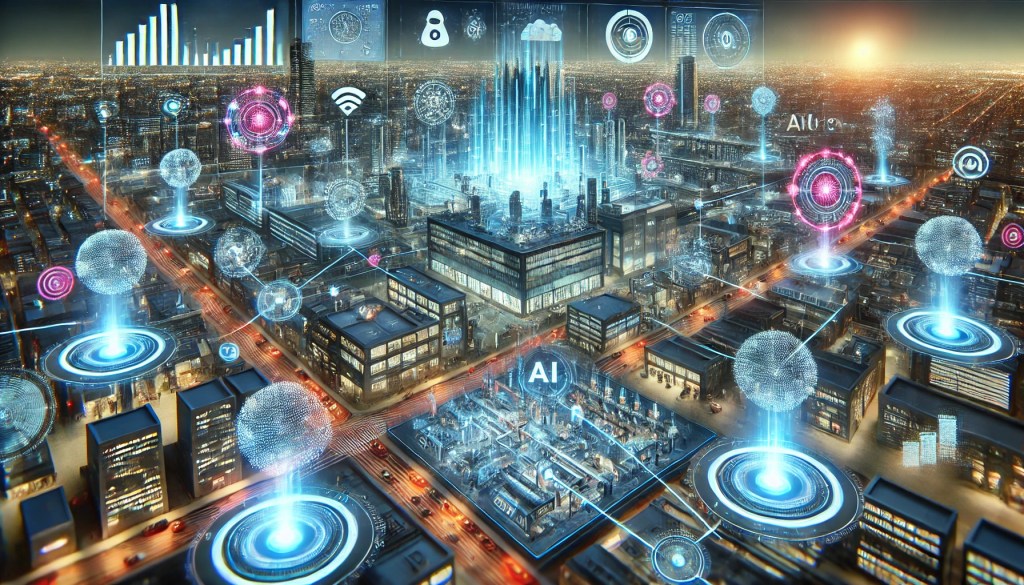
- The Digital Twin Revolution: Digital twins are transforming traditional linear business models into dynamic ecosystems that can be orchestrated in real-time.
- Uber as a Metaphor: Just as Uber matches riders with drivers in real-time, digital twin platforms will allow businesses to dynamically assemble resources to meet customer demands.
- From Web 2.0 to Digital Twins: The shift from Web 2.0 applications, which created isolated islands of automation, to digital twin platforms is set to harmonize data and operational workflows.
Impact
- Revolution in Business Operations: Digital twin platforms will enable businesses to move away from static, linear value chains to flexible, real-time operations.
- Enhanced Customer Experiences: Businesses will be able to tailor services more precisely to individual customer needs, similar to how Uber optimizes rides.
- New Industry Structures: The shift to digital twin platforms will likely lead to the rise of new industry leaders, disrupting traditional market structures.
- Increased Efficiency and Agility: By harmonizing data across platforms, businesses can achieve greater efficiency and agility, enabling faster decision-making and response times.
- Transformation of Management Models: The integration of intelligent agents and large language models will transform management, making traditional hierarchical structures obsolete.

 Eksentricity
Leave a comment