
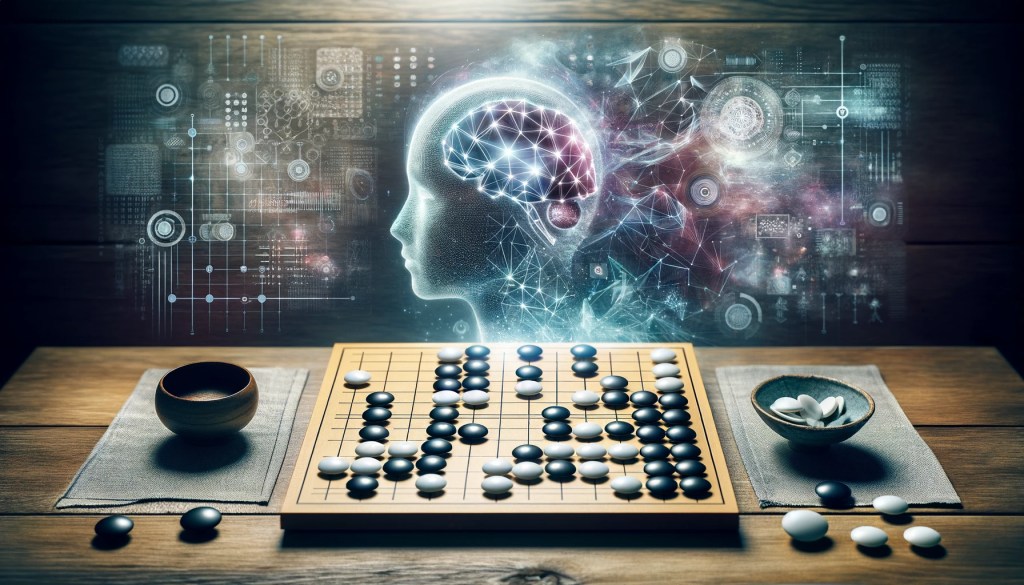
- Professional Go Players Surpass AI-Induced Limits: The introduction of AlphaGo by DeepMind in 2016 led to a significant improvement among professional Go players, debunking the notion of a skill ceiling in the game.
- Increased Creativity and Novelty in Play: Post-AlphaGo, professional Go players not only improved in skill but also displayed enhanced creativity, with a notable increase in historically novel moves, attributing to human ingenuity beyond AI mimicry.
- Open Source AI as a Catalyst for Innovation: The release of Leela Zero, an open-source Go engine, and tools like Lizzie that visualize AI’s decision-making, greatly contributed to the surge in human creativity and skill improvement in Go.
Impact
- Redefining Human-AI Collaboration: This evolution in Go highlights how AI can act as a catalyst for human skill enhancement and creativity, suggesting broader applications in education, training, and other fields.
- Open Source Software Elevating Skill Levels: The significant role of open-source AI tools like Leela Zero in improving professional skills underlines the value of transparent, accessible technology in advancing human expertise.
- Inspiration Across Competitive Fields: Similar to how AI has influenced Go and chess, other competitive areas might see breakthroughs in performance and strategy, driven by AI insights and data analysis.
- Shift in Learning Paradigms: The success story of Go professionals adapting AI strategies emphasizes the importance of flexibility and innovation in learning, potentially leading to a shift towards more immersive and experiential learning methods.
- Investment in AI Development and Research: The positive impact of AI on human creativity and performance in Go could encourage increased investment in AI research and development, focusing on collaborative human-AI interfaces and applications.



 Eksentricity
Leave a comment