
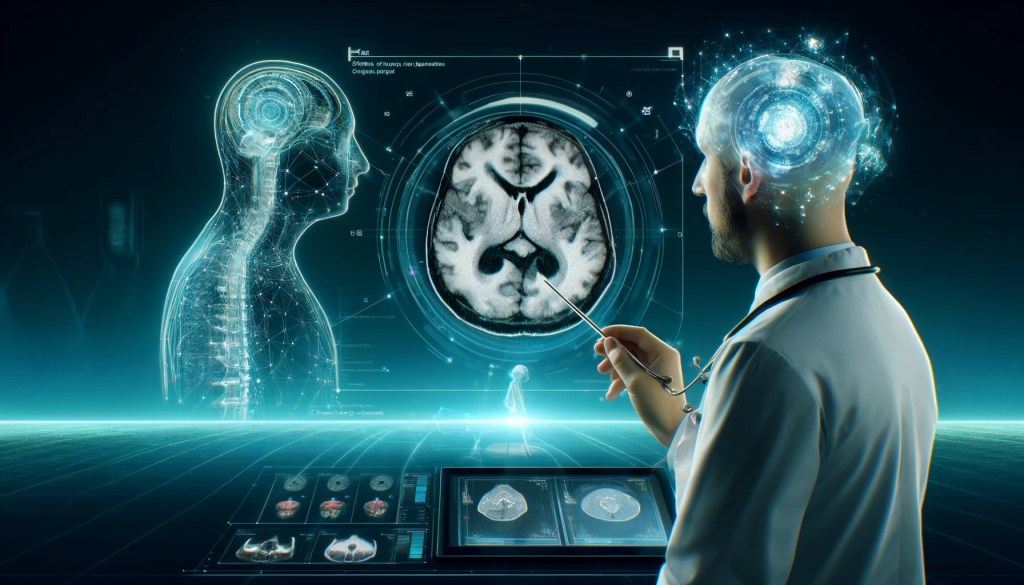
- Novel Evaluation Framework for CT Abnormalities: Introduced a novel framework to evaluate the accuracy of vision-language LLMs (like GPT-4V, LLaVA-Med, and RadFM) in generating summaries of CT scan abnormalities, showing high correlation (≥ 85%, p < .001) with clinician assessments.
- Decomposition and Auto-Evaluation with GPT-4: Utilized GPT-4 to decompose generated summaries into specific aspects (location, body part, type, attributes) for automatic evaluation against ground truth, highlighting the method’s effectiveness in identifying areas needing improvement.
- Strong Correlation between AI and Clinician Evaluations: Demonstrated a strong correlation (Pearson’s correlation coefficient of 0.87 ± 0.02, p<0.001) between automated evaluations by GPT-4 and clinician evaluations, suggesting GPT-4’s potential as a reliable tool for assessing clinical accuracy of AI-generated content.
Impact
- Potential to Alleviate Radiologist Burnout: Automating the evaluation process for CT scans could significantly reduce radiologists’ workload, potentially mitigating burnout by streamlining the validation of AI-generated summaries.
- Improvement in Diagnostic Accuracy and Efficiency: This framework could lead to improvements in the accuracy and efficiency of diagnostic processes by pinpointing the specific areas where AI models require enhancements, thereby supporting faster and more accurate patient diagnoses.
- Boost for AI Adoption in Clinical Settings: Demonstrating a high correlation between AI and clinician evaluations reinforces trust in AI capabilities, potentially accelerating the adoption of AI tools in clinical practices for diagnostic purposes.
- Enhanced AI Development Focus: The framework provides clear insights into the strengths and weaknesses of current vision-language models, guiding AI developers in prioritizing enhancements in areas crucial for clinical relevance and factual accuracy.
- Investment and Innovation in Healthcare AI: The promising results could attract more investment into healthcare AI research, fostering innovation in AI-driven diagnostic tools that are closely aligned with clinical needs and standards.



 Eksentricity
Leave a comment